Salesforce · Infrastructure · YoctoIT tech page

MuleSoft

Integration as a platform: reusable APIs connecting Salesforce to ERP, warehouse and legacy — once, for everyone.

FOCUS · REUSABLE INTEGRATIONAPI-led: the ERP exposed once, consumed by everything
YoctoIT material for clients and partners · Salesforce, Agentforce, Tableau, Slack and the other products mentioned are trademarks of Salesforce, Inc.
01 · What it is

MuleSoft, made clear.

MuleSoft organizes integration in layers of reusable APIs: system APIs on the ERP and the legacy, process APIs to orchestrate, experience APIs for the channels. The CRM showing the ERP's stock and orders is no longer a fragile point-to-point interface: it's an architecture every new project reuses.

API-led
three reusable layers: connection n+1 costs less than n
Anypoint
design, runtime, monitoring and catalog in one platform
Connectors
SAP, IBM i, databases, SaaS: the bridges already built
MuleSoft
OFFICIAL SALESFORCE BRANDING · MULESOFT
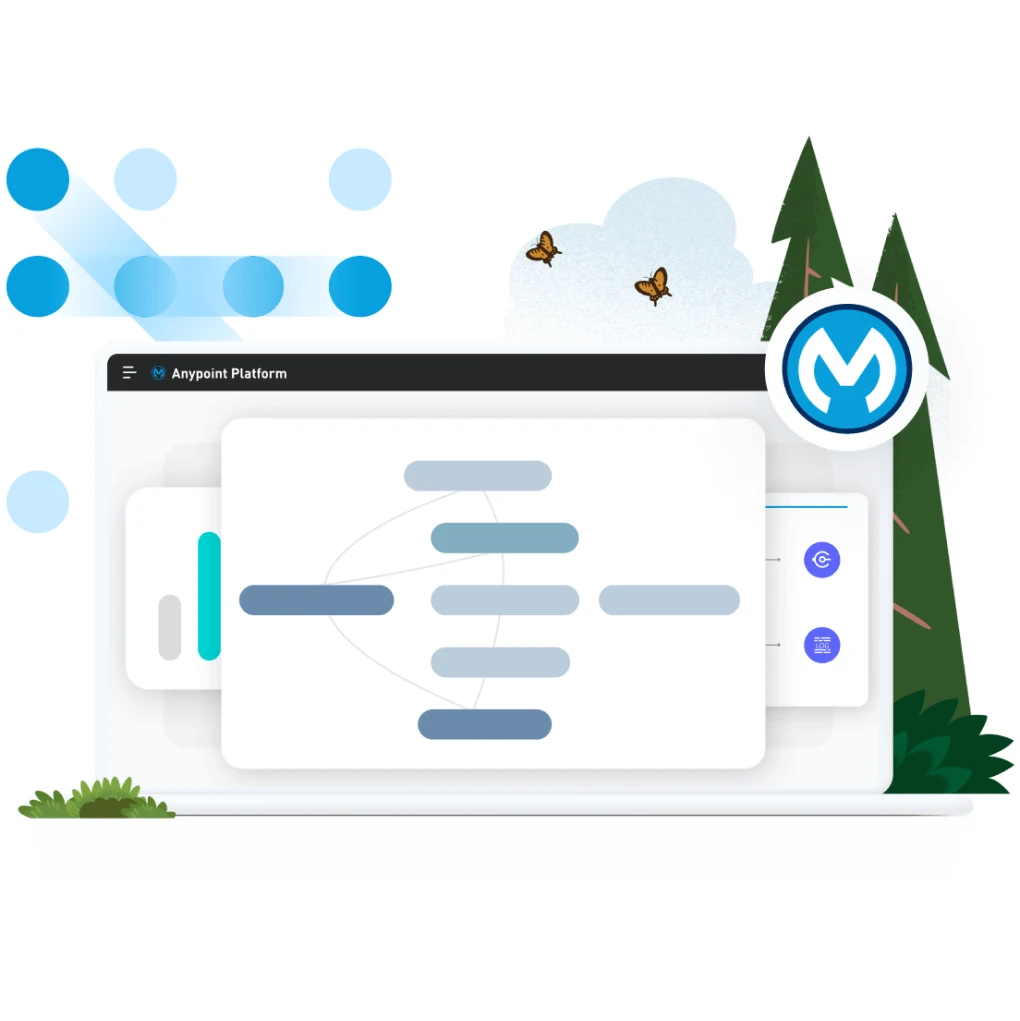
INTERFACCIA REALE · ANYPOINT PLATFORM · FONTE: MULESOFT
REAL INTERFACE · ANYPOINT PLATFORM · SOURCE: MULESOFT
02 · How to use it well

The things that make the difference.

The three layers

Channels: CRM, portals, appsexperience APIs
Process API
the orchestration of the processes
System APIERP, MES, legacy exposed safely
The in-house systemsSAP, IBM i, databases
Every system exposed only once

The Salesforce-ERP case

Orders, stock and master data synchronized: the project that unlocks the CRM's value.

Catalog and reuse

APIs documented and discoverable: the second project starts halfway there.

Flow resilience

Retries, queues and monitoring: the integration that holds the peak night.

API governance

Versions, policies and security: the contracts between systems taken seriously.

03 · In depth

API-led: the three layers that hold the integration

MuleSoft organizes integration on three layers: system APIs (systems exposed cleanly), process APIs (orchestration), experience APIs (channels). Anypoint Platform covers design (RAML/OAS), development, deployment (CloudHub 2.0/RTF/on-prem), management (policies, SLAs, analytics) and catalog (Exchange with the connectors); DataWeave transforms any format; the API Manager applies security and quotas without touching the code.

  • API-led — three layers with clear responsibilities: reuse instead of spaghetti
  • Exchange — hundreds of ready connectors (SAP, DBs, cloud): the last mile shortened
  • DataWeave — the language of transformations: JSON/XML/CSV/COBOL without tears
  • CloudHub 2.0 — the managed runtime: scale and isolation without infrastructure
  • API Manager — policies, quotas and SLAs outside the code: operational governance
  • Monitoring — end-to-end traces of the flows: the error found, not hunted
04 · Numbers and lifecycle

The numbers that matter.

3
the API-led layers: the map of the integration
100+
the enterprise connectors on Exchange
-64%
the declared integration development time
99,99%
the CloudHub SLA
Integration is architecture: layers, catalog and governance set up by us — IT that recomposes itself from reusable pieces.
05 · Use cases

Where it really pays off.

The CRM connected to the ERP

The salesperson sees the ERP's truth.

Composable business

Processes recomposed from APIs, not recoded.

Legacy modernization

The old system exposed cleanly, awaiting the new one.

An isolated CRM is half a CRM: with MuleSoft we connect it to the heart of the company.