Red Hat · Infrastruttura · YoctoIT tech page

OpenShift Virt

VMs inside OpenShift: the concrete way out of VMware, with containers and virtual machines on a single platform.

FOCUS · VMWARE EXITOne platform for VMs and containers: the migration that simplifies instead of adding
YoctoIT material for clients and partners · Red Hat, RHEL, OpenShift, Ansible and the other products mentioned are trademarks of Red Hat, Inc. o di sue affiliate.
01 · What it is

OpenShift Virtualization, made clear.

OpenShift Virtualization (KubeVirt) runs VMs as Kubernetes objects, next to containers: same network, same storage, same automation. For those re-evaluating VMware after Broadcom it's the structural answer: not another hypervisor, but a single platform for the whole estate.

1 platform
VMs and containers together: the end of management silos
MTV
Migration Toolkit for Virtualization: vSphere VMs migrated in waves
Bare metal
OpenShift directly on the iron: no hypervisor tax
OpenShift Virtualization
OFFICIAL RED HAT BRANDING · OPENSHIFT VIRT
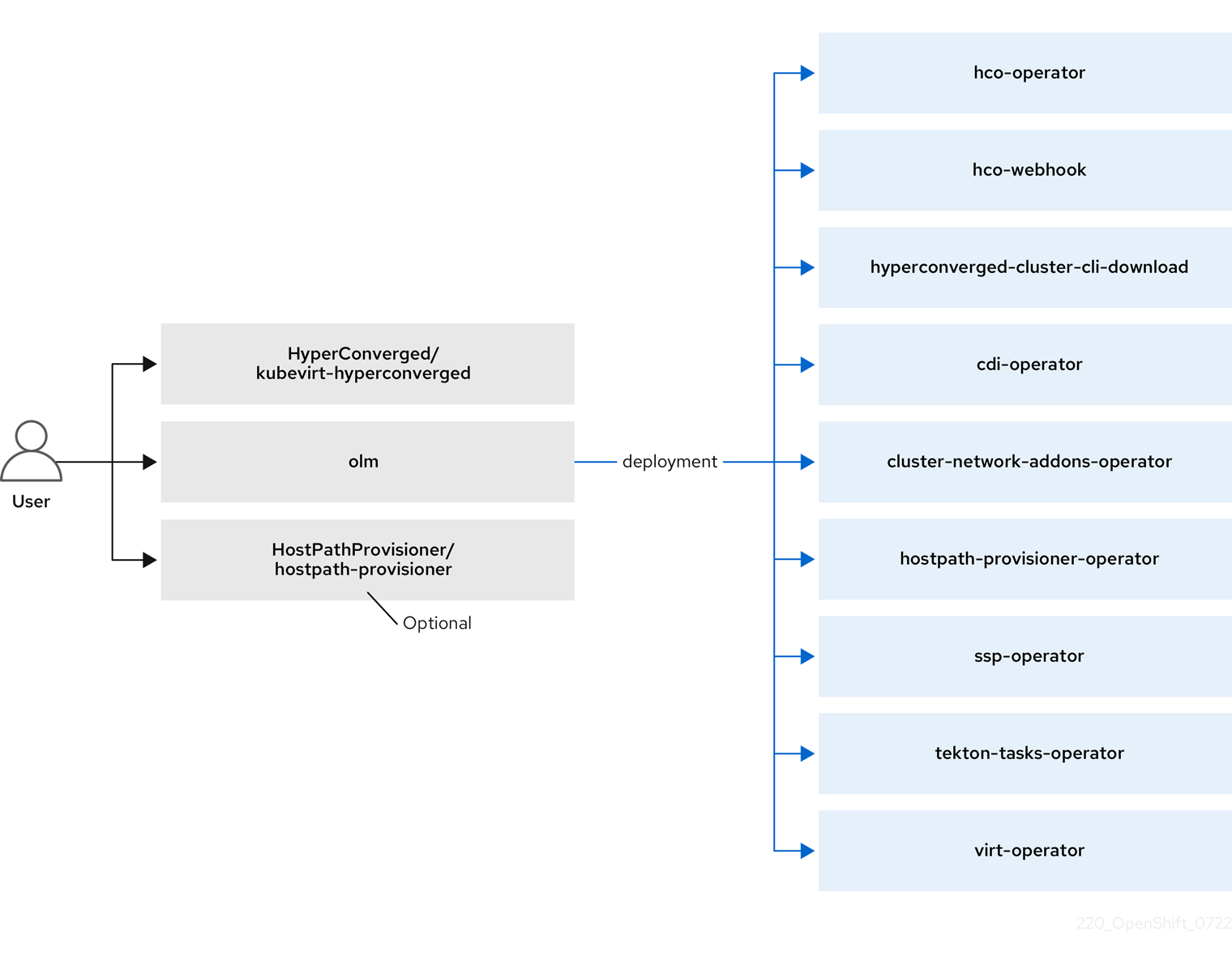
ARCHITETTURA UFFICIALE · OPENSHIFT VIRTUALIZATION · FONTE: RED HAT DOCS
OFFICIAL ARCHITECTURE · OPENSHIFT VIRTUALIZATION · SOURCE: RED HAT DOCS
02 · How to use it well

The things that make the difference.

The architecture

Applicazionilegacy in VMs, new in containers
VMs (KubeVirt)
Container
Operators
same control plane
OpenShift on bare metalsoftware-defined network and storage
IBM Fusion HCI or certified serversthe physical base
One control plane for everything

vSphere estate assessment

Which VMs migrate smoothly, which need modernizing, which stay: the map before the journey.

Migration in waves with MTV

The official toolkit moves VMs in groups, with rehearsals and rollback: the exit happens by degrees.

Storage and network rethought

ODF or Fusion for the disks, Multus for VM-style networks: the design must be drawn, not improvised.

Unified operations

One patch cycle, one monitoring, one Ansible automation for VMs and containers.

03 · In depth

KubeVirt in production

OpenShift Virtualization runs VMs in pods through KubeVirt: every VM is a CRD, disks are PVCs (with ODF or your storage's CSI), live migration moves VMs across nodes for maintenance and balancing. The Migration Toolkit for Virtualization (MTV) imports from vSphere in waves with network and storage mappings; VMs get multiple networks with Multus/NMState and microsegmentation policies like pods.

  • VM come CRD — VirtualMachine is a K8s object: GitOps, RBAC and quotas apply to VMs too
  • Live migration — node evacuation for patching without stopping the VMs
  • MTV — planned import from vSphere in waves: network/storage mapping and controlled cutover
  • Multus/NMState — declarative VLANs and bonds: 'hypervisor-style' networking inside K8s
  • ODF/CSI — VM disks on policy-driven storage: native snapshots and clones
  • Metro DR — with stretched ODF: VMs that survive the site
04 · Numbers and lifecycle

The numbers that matter.

0
hypervisor licenses: the subscription covers the platform
2
MTV import modes: cold and warm (final delta)
100%
K8s APIs: VMs enter the CI/CD like containers
4/anno
the OpenShift releases: EUS every other one for those who want calm
The VMware exit is executed in measured waves: estate assessment, MTV under our direction and operations unified on a single platform.
05 · Use cases

Where it really pays off.

VMware exit

The structural answer to the new Broadcom licensing.

Gradual modernization

Legacy apps in VMs today, containers tomorrow, same platform.

New data centers

Those starting now skip the hypervisor layer entirely.

The alternative to VMware exists and we install it: assessment, migration in waves and 24/7 operations.