Microsoft Azure · Infrastruttura · YoctoIT tech page

Azure Local

The cloud that comes on-prem (formerly Azure Stack HCI): Azure infrastructure in your data center and at the edge, governed from the portal.

FOCUS · AZURE IN YOUR RACKLatency, data on site and cloud operations: hybrid without a double operating model
YoctoIT material for clients and partners · Microsoft, Azure, Entra, Defender and the other products mentioned are trademarks of Microsoft Corporation.
01 · What it is

Azure Local, made clear.

Azure Local brings the Azure stack onto certified hardware in your data center: VMs (and AKS) managed from the Azure portal, updates orchestrated by Microsoft, subscription billing. For those with latency or data-residency constraints it's the way to have the cloud without giving up the premises.

On-prem
workloads stay on site: latency and data residency solved
1 portal
local VMs are managed from Azure like the cloud ones
Certificato
validated hardware (Lenovo, HPE, Dell): no experiments
Azure Local
OFFICIAL MICROSOFT BRANDING · AZURE LOCAL
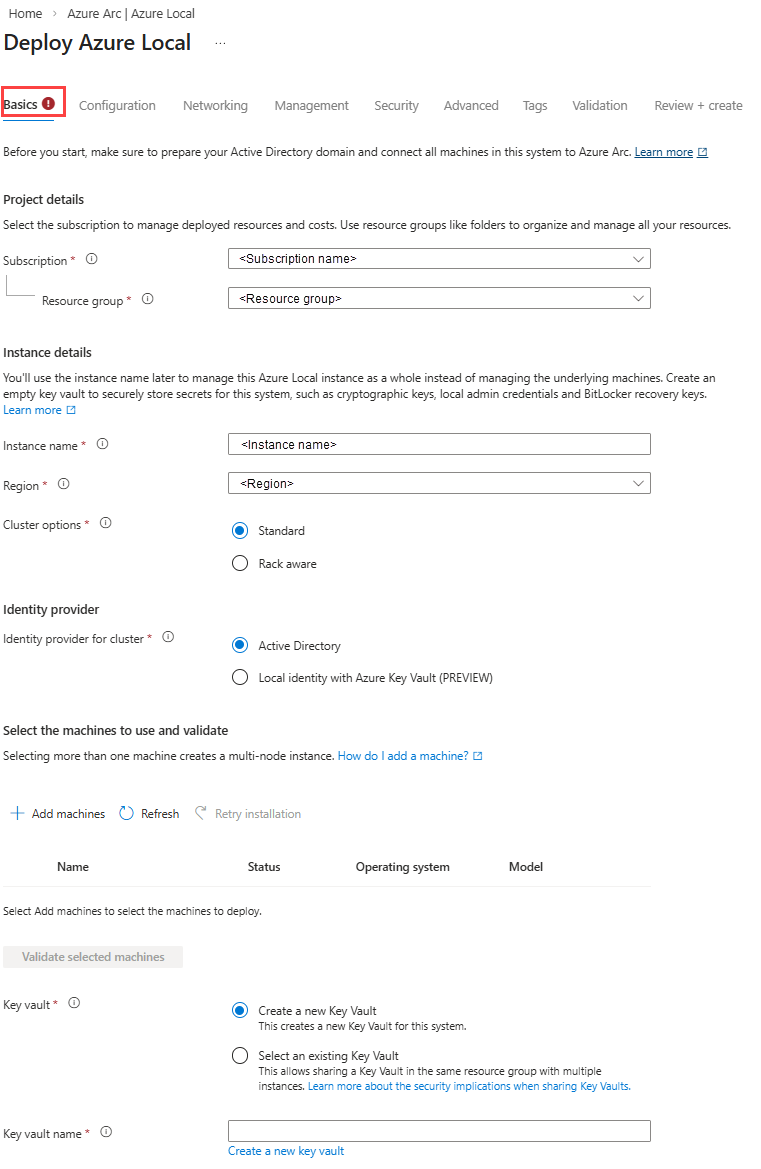
PORTALE AZURE REALE · DEPLOY AZURE LOCAL · FONTE: MICROSOFT LEARN
REAL AZURE PORTAL · AZURE LOCAL DEPLOYMENT · SOURCE: MICROSOFT LEARN
02 · How to use it well

The things that make the difference.

The stack

Windows/Linux VMs + AKSthe workloads, on site
Compute
Storage Spaces Direct
SDN
the hyperconvergence underneath
Azure Arc & portalgovernance and billing from the cloud
Certified 2-16 node clustersthe iron in your rack
The control plane in the cloud, the data at your place

Cluster sizing and design

Nodes, RDMA network and fault domains: hyperconvergence is designed like serious storage.

The bridge to the existing

Coexistence and migration from vSphere/Hyper-V: the journey in stages, not the big bang.

Orchestrated patches

Managed solution updates: the whole stack (OS, agents, firmware) updated like a product.

Edge and branches

Small clusters in peripheral sites, centrally governed: distributed IT without travel.

03 · In depth

The architecture under the hood

Azure Local runs on validated clusters (2-16 nodes) with Storage Spaces Direct — 2/3-way mirror or parity on local NVMe/SSD disks — and optional SDN; the lifecycle follows a release train with updates orchestrated by the platform update manager (OS+drivers+firmware together). Registration in Azure enables Arc for VM management, on-premises AKS and the connected services; billing is per core/month on the subscription.

  • Storage Spaces Direct — software-defined storage on local disks: 3-way mirror by default
  • Cluster validati — certified hardware (Lenovo MX, HPE, Dell): no DIY
  • Update di piattaforma — OS, agents, drivers and firmware in a single orchestrated train
  • Arc VM management — local VMs created from the Azure portal: same experience
  • AKS su Azure Local — containers on site with the managed control plane
  • Rete RDMA — RoCE/iWARP for the storage: the network is part of the design
04 · Numbers and lifecycle

The numbers that matter.

2-16
nodes per cluster: you start small
3-way
the default mirror: two failures tolerated
mensile
the platform's update pace
core/mese
the billing model: pure OpEx
Microsoft hyperconvergence lives on validations: certified hardware, RDMA network done right and a managed update train — all within our perimeter.
05 · Use cases

Where it really pays off.

Regulatory constraints

The data that must stay in the country, with cloud operations.

Factory and logistics

Latency to MES and lines under control.

An alternative to VMware

An exit within the Microsoft house for those already on Azure.

True hybrid is a single operating model: Azure Local makes it possible, we set it up.