Azure's managed Kubernetes: a worry-free control plane and native integration with corporate identity, monitoring and policies.
AKS removes the control-plane toil and integrates Kubernetes into the Microsoft world: access via Entra ID, telemetry in Azure Monitor, policies via Azure Policy, the ACR registry. What remains are the choices that make the difference: node pools, networking, autoscaling and supply-chain security.


System separated from workloads, spot for batch, GPUs where needed: the bill and stability say thanks.
Azure CNI, private clusters, ingress: network choices are made at the start or paid for later.
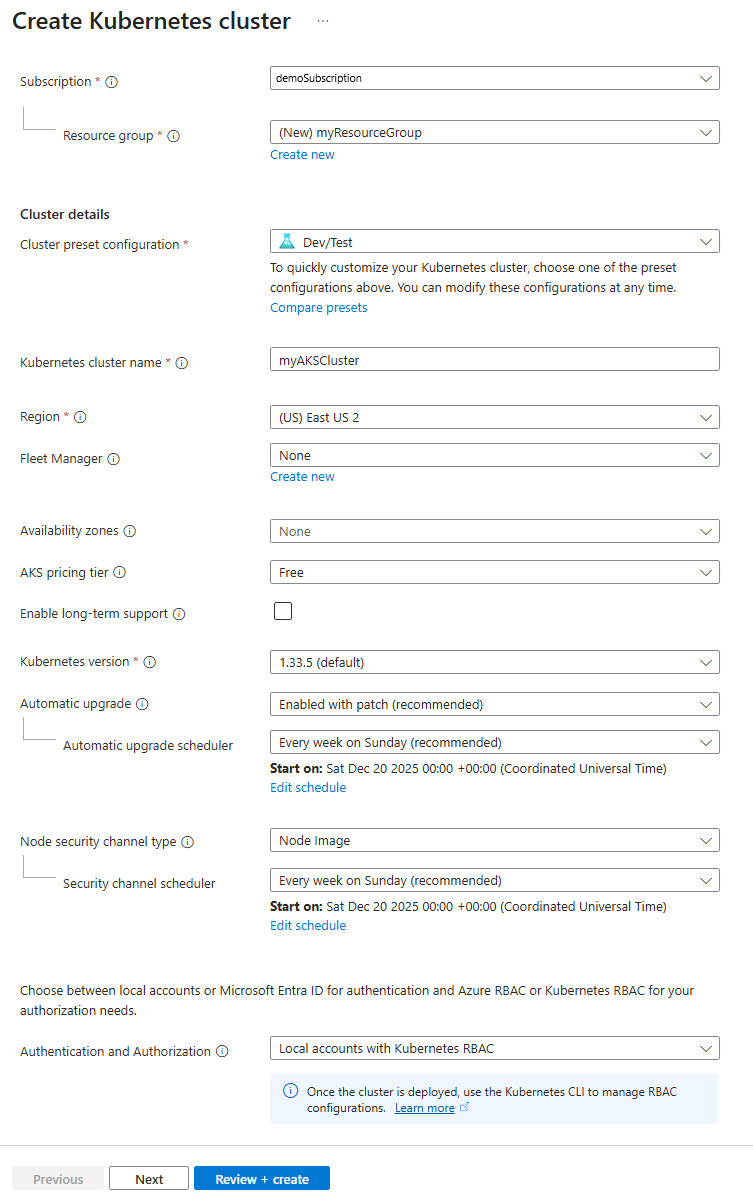
Release channels and maintenance windows: the updated cluster stays a boring event.
Integrated Flux and Azure Policy on the clusters: configuration governed as code.
AKS separates system and user node pools (spot included), with per-pool autoscalers and maintenance windows for upgrades; releases follow channels (rapid/regular/stable) and LTS gives 2 years on the same minor. The network is a choice: Azure CNI overlay to save IPs or pod subnet for full integration; Workload Identity federates pods on Entra; deployment safeguards block out-of-standard manifests.
The standard runtime for corporate cloud-native apps.
Jobs and peaks on spot nodes: power at clearance prices.
The same patterns on on-prem clusters too, governed from Azure.