Microsoft Azure · Software · YoctoIT tech page

AI Foundry

OpenAI models and the AI catalog with enterprise controls: generative AI inside the corporate perimeter, not in the wild west.

FOCUS · GPT IN THE ENTERPRISEThe best models with identity, private networking and data that trains nobody
YoctoIT material for clients and partners · Microsoft, Azure, Entra, Defender and the other products mentioned are trademarks of Microsoft Corporation.
01 · What it is

Azure AI Foundry & OpenAI, made clear.

Azure AI Foundry is the enterprise door to the models: GPT-4o and successors, plus the catalog (Mistral, Llama, Phi), served with Azure guarantees — private endpoints, Entra ID, data not used for training, configurable content filters. On top, the tools to build: RAG with AI Search, agents, evaluations.

Enterprise
your data stays yours: no training on your prompts, clear contracts
Privato
private endpoints and VNets: AI inside the network perimeter
RAG
integrated Azure AI Search: answers grounded on YOUR documents
Azure AI Foundry & OpenAI
OFFICIAL MICROSOFT BRANDING · AI FOUNDRY
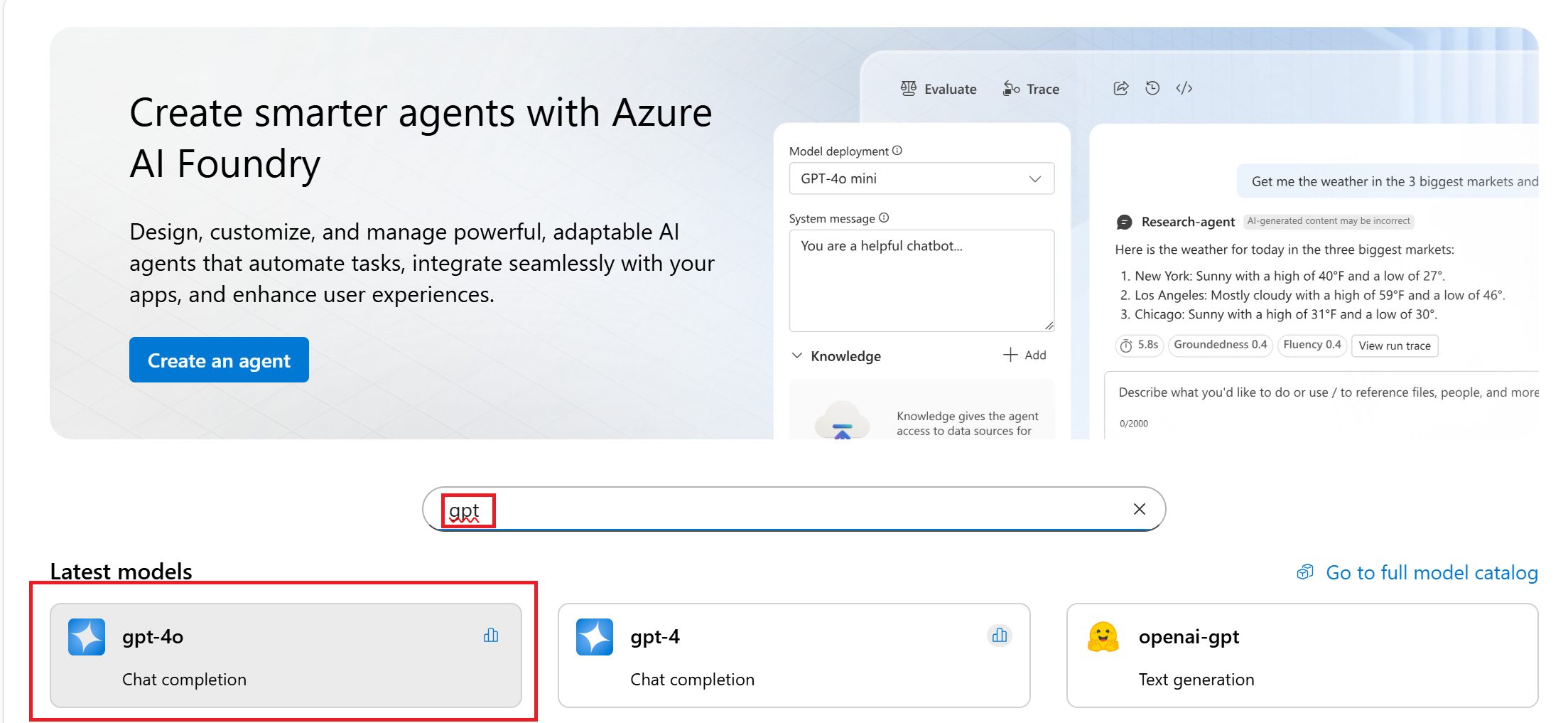
CONSOLE REALE · AZURE AI FOUNDRY · FONTE: MICROSOFT LEARN
REAL CONSOLE · AZURE AI FOUNDRY · SOURCE: MICROSOFT LEARN
02 · How to use it well

The things that make the difference.

The GenAI stack

Corporate copilots and assistantsthe use cases
OpenAI models
Open catalog
AI Search (RAG)
the best · the alternative · the context
AI Foundry · governancekeys, quotas, content filters, evaluations
Azure identity, network and coststhe usual controls
Powerful AI, within the rules

The right first use case

Internal knowledge base, customer support, documents: you start where ROI is measurable in weeks.

RAG done right

Chunking, indexes and evaluations: the difference between the demo and the system that answers right.

Token governance

Per-team quotas, cost monitoring and content filters: AI adopted without invoice surprises.

Continuous evaluation

Groundedness and quality measured: the copilot is commissioned like any production system.

03 · In depth

Deployments, RAG and the AI gateway

In Foundry models are deployed standard (shared), provisioned (reserved PTUs) or global: the choice decides latency and costs; RAG goes through AI Search with hybrid retrieval (vectors+BM25+semantic ranker); flows are evaluated with datasets and metrics (groundedness, relevance) before production; APIM as an AI gateway adds per-team quotas, retries and centralized content safety. Managed identities and private endpoints close the perimeter.

  • PTU — reserved throughput for production: stable latency, known cost
  • Hybrid retrieval — vectors + keywords + reranker: the RAG that actually finds
  • Evaluation — metrics on test datasets: the prompt is promoted with numbers
  • AI gateway (APIM) — quotas, logs and multi-model failover in one place
  • Content Safety — configurable input/output filters: the company policy applied
  • Private endpoint — models and indexes without internet: the perimeter closed
04 · Numbers and lifecycle

The numbers that matter.

3
deployment modes: standard, provisioned, global
0
training on your data: a contractual guarantee
mensile
the pace of new models: catalog governance is needed
p95
latency is measured per deployment: PTUs where it counts
Enterprise GenAI is engineering: the right deployments, hybrid RAG and continuous evaluations — with the AI gateway governing the teams.
05 · Use cases

Where it really pays off.

Copilots on documents

Policies, contracts and manuals queryable in natural language.

Customer support

Bots answering from YOUR knowledge, with citations.

Document automation

Orders, invoices and emails read and structured by the models.

Generative AI in the enterprise is a platform project: perimeter, data and costs before the prompts.