Red Hat · Software · YoctoIT tech page

Ansible

Declarative automation for servers, network and middleware: run-books become reusable, testable, tracked code.

FOCUS · AUTOMATION FIRSTFrom 'how it's done' to 'who runs it': operations written once and used always
YoctoIT material for clients and partners · Red Hat, RHEL, OpenShift, Ansible and the other products mentioned are trademarks of Red Hat, Inc. o di sue affiliate.
01 · What it is

Ansible Automation Platform, made clear.

Ansible describes the desired state in readable YAML playbooks and applies it agentless, via SSH or API. The Automation Platform adds the enterprise layer: a controller with RBAC and audit, a hub of certified content, Event-Driven Ansible for automatic remediation. Operations stop living in sysadmins' heads.

Agentless
SSH and APIs: everything gets automated, from RHEL to IBM i, from network to cloud
EDA
Event-Driven: the monitoring event triggers the remediation playbook
RBAC + audit
who can run what, and every run tracked: governed automation
Ansible Automation Platform
OFFICIAL RED HAT BRANDING · ANSIBLE
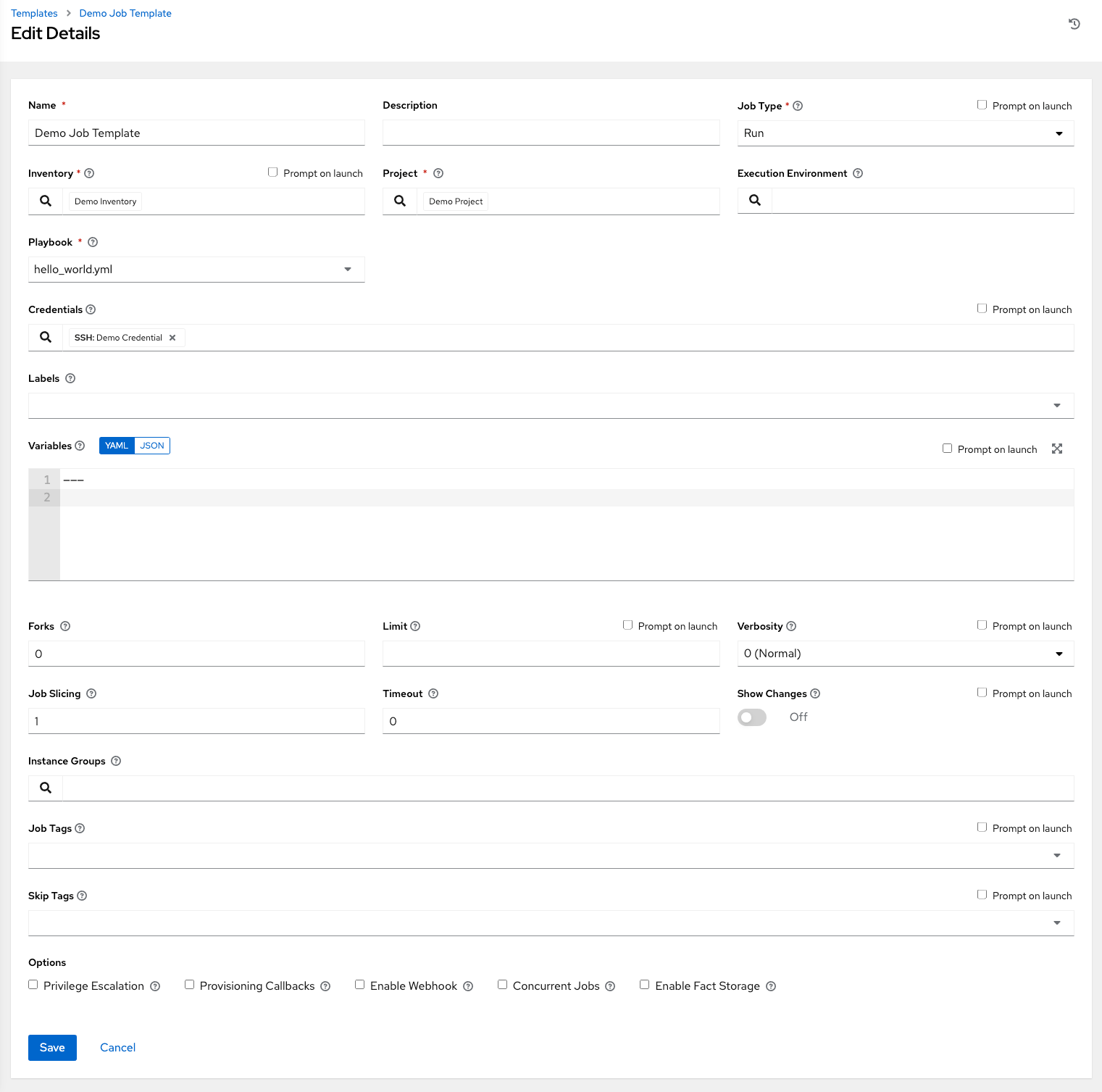
CONSOLE REALE · AUTOMATION CONTROLLER · FONTE: RED HAT DOCS
REAL CONSOLE · AUTOMATION CONTROLLER · SOURCE: RED HAT DOCS
02 · How to use it well

The things that make the difference.

La piattaforma

Events & requestsmonitoring, tickets, self-service
Controller
Automation Hub
EDA
execute · distribute · react
Playbooks & collectionsoperational knowledge, versioned
Servers · network · cloud · IBM ieverything that has an API
Operational knowledge becomes a platform

Run-books as code

Our validated run-books become playbooks: the same execution quality at 3 a.m. and 3 p.m.

Orchestrated patching

Ansible + Satellite: windows, pre-checks, patches, verification and reports in a single flow.

On IBM i and network too

The collections cover IBM i, storage and networking: automation doesn't stop at the x86 world.

Governed self-service

The application team launches the approved job, without asking the sysadmin: faster, safer.

03 · In depth

Controller, EDA and certified content

Automation Platform 2.5 separates control plane and execution: execution environments are containers with pinned collections and dependencies, hop/execution nodes reach segregated networks (mesh), the Controller provides RBAC, workflows and approvals, the Automation Hub serves certified, signed content. Event-Driven Ansible listens to sources (webhooks, Kafka, monitoring) and launches rulebooks: from alert to remediation without humans.

  • Execution environment — the containerized, versioned run environment: the end of 'it works on my node'
  • Automation mesh — hop nodes to DMZs and sites: automation reaches everywhere
  • Workflow — chains with approvals and convergences: the complex change orchestrated
  • EDA rulebook — if event then playbook: remediation driven by alerts
  • Certified content — signed collections for network/cloud/security: real support
  • Survey & RBAC — self-service with a form: who can launch what, with which parameters
04 · Numbers and lifecycle

The numbers that matter.

140+
the certified collections in the catalog
0
agents: SSH/WinRM/APIs suffice
RBAC
the team/org model: automation delegated safely
2.5
the current platform with unified gateway
Enterprise automation is governance, not scripts: run-books in collections, EDA on NOC alerts and every run tracked.
05 · Use cases

Where it really pays off.

Automatic remediation

The known anomaly fixes itself, the ticket documents it.

End-to-end provisioning

From VM to configured middleware in one run.

Continuous compliance

Drift detected and corrected, with evidence.

IT that never stops is IT that never improvises: our run-books, in Ansible code.