Cisco · Infrastruttura · YoctoIT tech page

Nexus & ACI

Data center networking: ultra-low-latency spine-leaf and policies with ACI — the data center network as a system, not as boxes.

FOCUS · THE DATA CENTER NETWORKSpine-leaf, VXLAN and policies: the network that follows the applications
YoctoIT material for clients and partners · Cisco, Meraki, Splunk, Duo and the other products mentioned are trademarks of Cisco Systems, Inc. o di sue affiliate.
01 · What it is

Nexus & ACI, made clear.

Nexus is data center switching — microsecond latencies, 100/400G, spine-leaf fabric over VXLAN. ACI adds the intent: the communication policies (who talks to whom) defined at the application level and enforced by the fabric, wherever the workload moves. The DC network stops being scattered configurations.

Spine-leaf
every server two hops from every other: the topology that scales
ACI
the per-application policies: the fabric's microsegmentation
400G
the ports for the AI era: storage and GPUs without bottlenecks
Nexus & ACI
OFFICIAL CISCO BRANDING · NEXUS & ACI
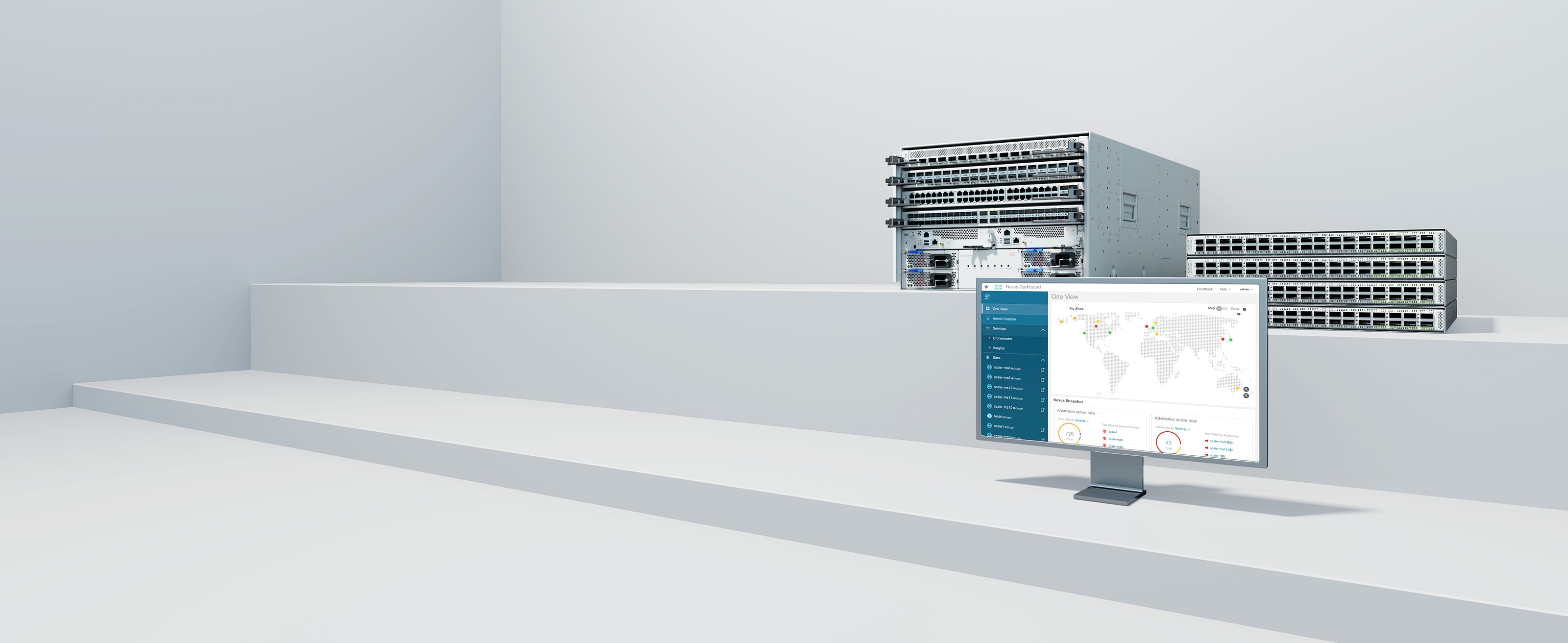
FOTO UFFICIALE CISCO · FAMIGLIA NEXUS 9300
OFFICIAL CISCO PHOTO · NEXUS 9300 FAMILY
02 · How to use it well

The things that make the difference.

The fabric

Applications & VMs & containersthe workloads that talk
Leaf
Spine
VXLAN overlay
edge · backbone · logic
APIC · the policiesthe intent enforced everywhere
Nexus 9000the fabric's iron
The network as a single logical switch

Migration from the classic network

From three tiers to spine-leaf without a big bang: coexistence planned.

Policies with method

EPGs and contracts designed on the real applications: the microsegmentation that doesn't break production.

Automation via API

The fabric is governed from code: network changes enter the CI/CD.

Fabric telemetry

Flows and latencies seen by the network: the 'culprit' found with data.

03 · In depth

ACI: the policy fabric, explained

ACI turns the data center into a policy-governed spine-leaf fabric: the APIC is the controller (3+ cluster), EPGs group the workloads and contracts declare who talks to whom (whitelist by design), tenants isolate environments and customers, the underlying VXLAN makes the network a single overlay; multi-site extends the policies across data centers; the VMM integration (vSphere/K8s) follows the workloads where they're born.

  • EPG + contract — security declared between groups: native microsegmentation
  • APIC — the fabric as a single object: config, upgrades and audit centralized
  • Spine-leaf VXLAN — east-west at constant latency: the topology that doesn't saturate
  • Multi-site — the same policies across DCs: DR without double management
  • Integrazione VMM — the EPGs that follow the VMs and the pods: the network that knows the workloads
  • Whitelist by design — what isn't contracted doesn't pass: NIS2 says thanks
04 · Numbers and lifecycle

The numbers that matter.

3+
the APIC nodes in a cluster: the controller redundant
0
default trust: the contract or nothing
2
DCs+ with multi-site: single policies
μs
the spine-leaf latencies: the east-west that flies
ACI is as powerful as the design that holds it: tenants, contracts and the migration from the legacy network — the design we sign.
05 · Use cases

Where it really pays off.

New data centers

The fabric born ready for 10 years.

Networks for AI

The GPU-storage traffic without compromises.

Segment compliance

The zones (PCI, OT) enforced by the fabric.

The data center network is the floor of everything: spine-leaf designed and managed by us.