Cisco · Software · YoctoIT tech page

ISE

Network access control: who gets in, from where, on which VLAN — the microsegmentation that starts at the socket.

FOCUS · THE NETWORK THAT ASKS FOR ID802.1X, profiling and policies: the unknown device doesn't browse
YoctoIT material for clients and partners · Cisco, Meraki, Splunk, Duo and the other products mentioned are trademarks of Cisco Systems, Inc. or its affiliates.
01 · What it is

Identity Services Engine, made clear.

ISE decides who enters the network and what they can do: it authenticates users and devices (802.1X, MAB), profiles them (is that MAC a printer or a laptop?), puts them in the right VLAN/SGT and — with software-defined segmentation — enforces who talks to whom. The socket in the meeting room stops being an open door onto the heart of the company.

802.1X
authentication at the port: the network asks for credentials
Profiling
devices recognized by how they behave: the IoT inventoried by itself
SGT
the security tags: the policy follows the user, not the socket
Identity Services Engine
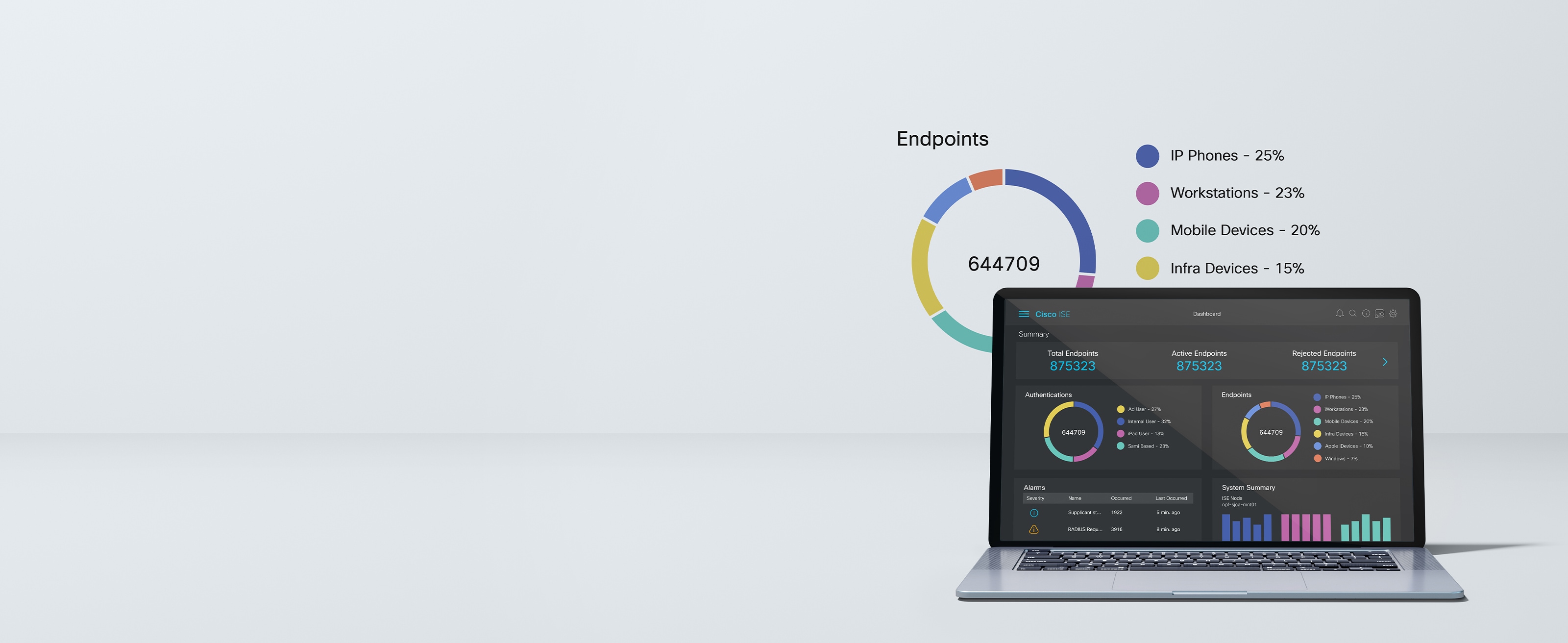
OFFICIAL CISCO BRANDING · ISE
INTERFACCIA UFFICIALE · CISCO ISE · FONTE: CISCO
OFFICIAL INTERFACE · CISCO ISE · SOURCE: CISCO
02 · How to use it well

The things that make the difference.

The polite bouncer

Who connectsemployees, guests, IoT, suppliers
AuthN (dot1x/MAB)
Profiling
Authorization
who you are · what you are · where you go
ISE · central policythe rules, once
Switches, Wi-Fi, VPNapplied everywhere
Every port, a check

Rollout in stages

Monitor mode first, enforcement later: the network controlled without blocking the company on Monday.

Civilized guest and BYOD

Sponsor portals and onboarding: the guest browses, but only where they should.

Segmented IoT

Printers, cameras and sensors in their own bubble: the weak device is no longer the bridge.

With the factory

ISE + industrial networks: OT inside access control too, with judgment.

03 · In depth

NAC and segmentation by identity

ISE decides who enters the network and with what rights: 802.1X for the managed, MAB and profiling for the IoT, the posture checks verify the endpoint (patches, AV) before access, the results (authorizations, TrustSec SGTs) segment by identity instead of by VLAN; the guest portal handles guests and BYOD; pxGrid shares context with firewalls and XDR: quarantine becomes automatic (ANC).

  • 802.1X + MAB — every port and SSID authenticated: the free cable no longer exists
  • Profiling — the IoT recognized (cameras, printers, PLCs) and put in its pen
  • Posture — no patches, no network: the endpoint verified at the entrance
  • TrustSec/SGT — segmentation by label: the VLANs stop proliferating
  • pxGrid + ANC — the context shared: the XDR asks, ISE isolates the device
  • Guest & BYOD — portals and sponsors: the guest without a password post-it
04 · Numbers and lifecycle

The numbers that matter.

100%
of the devices identified before access
s
quarantine via ANC: automatic containment
NIS2
network access control with evidence
HA
distributed multi-node deployment: the NAC that doesn't fall
NAC is a project about processes: inventory, policies in waves and monitor mode before enforcement — the network that asks for ID.
05 · Use cases

Where it really pays off.

Access compliance

Who was on the network, when, from where: the answer ready.

Mixed environments

Employees, consultants and machines on the same infrastructure, separated.

Network zero trust

Duo's complement: identity on the access, ISE on the network.

The open network is an act of faith: with ISE it becomes a guest list.