AWS · Software · YoctoIT tech page

Lambda

The serverless that set the standard: code that runs on events, scales from zero to thousands of executions and is billed by the millisecond.

FOCUS · EVENT-DRIVENEvent-driven integrations and processes without servers to maintain
YoctoIT material for clients and partners · AWS e i nomi dei servizi sono marchi di Amazon.com, Inc.
01 · What it is

AWS Lambda, made clear.

Lambda runs functions in response to events — a file on S3, a message in a queue, an API call — with no server to manage: automatic scaling, high availability included and billing per millisecond of execution.

0 servers
nothing to patch, nothing to size
ms
billing by the millisecond: idle isn't paid for
1000+
concurrent executions out of the box, extendable
Icona ufficiale AWS — AWS Lambda
OFFICIAL AWS ICON · Lambda
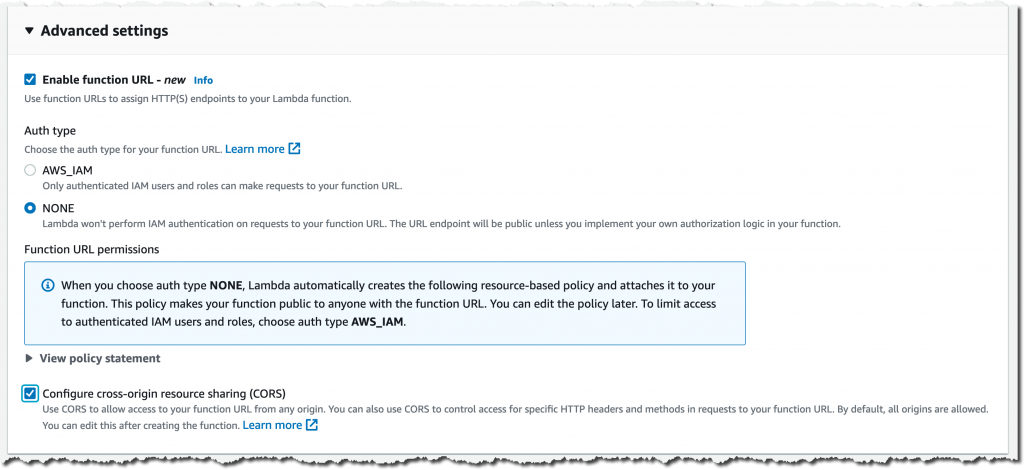
Console AWS
REAL AWS CONSOLE · LAMBDA · SOURCE: AWS BLOG
02 · How to use it well

The things that make the difference.

The event architecture

EventsS3, queues, APIs, schedulers, streams
Lambda
Step Functions
EventBridge
functions · orchestration · bus
Integrationsdatabases, SaaS, on-prem via VPC
CloudWatchlogs, metrics and tracing of every execution
From event to action, without servers

Step Functions

Complex flows orchestrated visually: retries, parallelism and states without glue code.

EventBridge

The company event bus: systems talking through events, decoupled.

Inside the VPC

Functions reaching private databases and systems: serverless for the enterprise too.

SnapStart & provisioned concurrency

Cold starts tamed: constant latencies even for Java and sudden peaks.

03 · In depth

Runtimes, concurrency and the limits to know

Lambda runs functions up to 15 minutes with 128MB-10GB of memory (CPU scales with memory): cold starts are mitigated with provisioned concurrency or SnapStart; concurrency is per account/region with reserved concurrency to protect critical functions. Event source mapping consumes SQS/Kinesis/DynamoDB Streams with batching and DLQs; function URLs and API Gateway expose HTTP; layers share dependencies.

  • Cold start — provisioned concurrency or SnapStart (Java/.NET): the p99 under control
  • Reserved concurrency — the dedicated quota: the critical function doesn't die of starvation
  • Event source mapping — declarative batching, retries and DLQs from queues and streams
  • 15 min / 10 GB — the limits to design around: beyond them, you split or go to Fargate
  • Idempotenza — at-least-once delivery: code that tolerates duplicates
  • Powertools — structured logging, tracing and metrics: observability as standard
04 · Numbers and lifecycle

The numbers that matter.

1 ms
the billing granularity of duration
15 min
the maximum timeout per invocation
10 GB
the maximum memory (CPU proportional)
1000
the default concurrency per region: raised with a quota
Serverless rewards design: idempotency, DLQs and concurrency set as standard — and at night the queues empty themselves.
05 · Use cases

Where it really pays off.

System-to-system integrations

The file arrives, gets validated and lands in the ERP: lightweight ETL without dedicated servers.

Low-traffic APIs

Endpoints costing cents per month: perfect for sporadic-call B2B.

Operational automation

Reactions to infrastructure events: the missing tag fixed, the alarm enriched.

Serverless is perfect for glue and event-driven processes: we use it where it pays, not where it's fashionable.